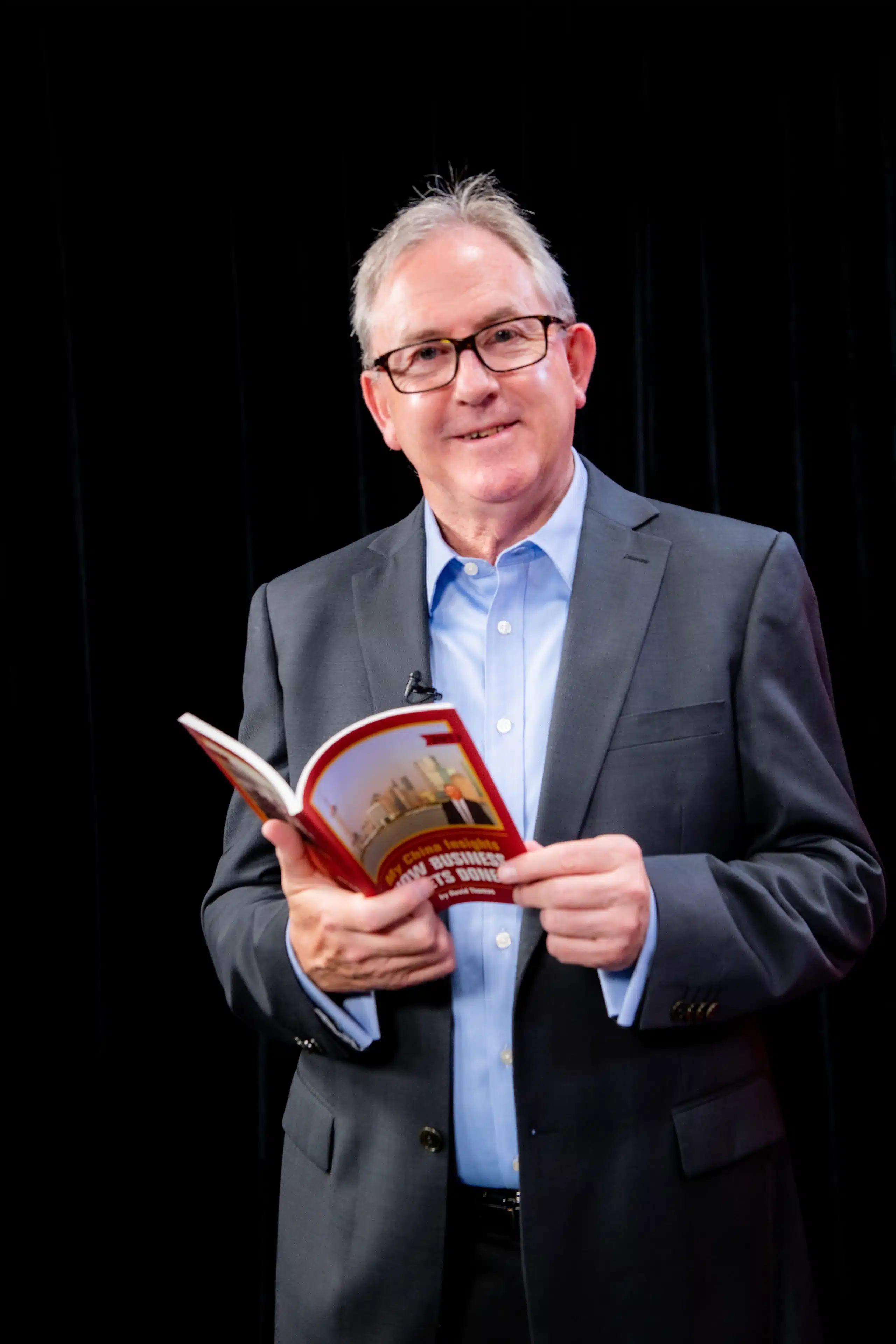
David Thomas
Asia Pacific Business Advisor & Speaker
A business advisor and keynote speaker, helping leaders and entrepreneurs navigate cross-cultural trade, investment, and commercialisation in the Asia Pacific. With decades of experience in Hong Kong, China, and Australia, he shares practical insights, real-world stories, and strategies to succeed across borders.
Quick Contact
David Thomas is a highly regarded business advisor and speaker in the Asia Pacific region, known for his passion, engagement, and expertise in cross-cultural trade, investment, and collaboration. With a 30-year career spanning the UK, Hong Kong, Australia, and the Philippines, David has supported entrepreneurs, investors, and business leaders across industries to navigate the complexities of doing business and raising capital in Asia.
Currently, David focuses on assisting Australian technology companies with capital-raising and commercialisation initiatives in Hong Kong and China’s Greater Bay Area. He draws on decades of experience advising SMEs, providing practical guidance on strategy, market entry, and effective cross-cultural communication.
David’s connection to Asia is personal as well as professional. Having lived in Hong Kong during the 1980s and 1990s, he comes from a family deeply involved in Hong Kong’s political and legal landscape during the handover period. His father served as Attorney General of Hong Kong (1983–88) and was involved in drafting the Basic Law ahead of 1997, while his stepmother collaborated with leaders including Deng Xiaoping and Margaret Thatcher on the region’s transition.
In his keynotes and workshops, David blends personal anecdotes, case studies, and real-world experience to help leaders understand the cultural nuances, opportunities, and challenges of doing business across Asia. His insights empower audiences to communicate effectively, build trust, and achieve sustainable success in the Asia Pacific region.
Video
Topics
Geopolitics – USA, China and Asia
What’s Happening and Why it Matters?
We live in the Asian Century. In the coming years, China, India, Japan and Indonesia will become the largest economies in the world, driven by innovation, productivity and domestic consumption from their large and fast growing middle class and high net worth populations. Smaller Asian countries like South Korea, Malaysia, Thailand, Vietnam and the Philippines are also emerging as economic powers in their own right, as the World tilts towards Asia and business leaders, entrepreneurs and investors seek access to the high growth markets of the region.
Not surprisingly, this massive shift in the projection of global power, influence and leadership is causing disruption in the world, especially in the US and Europe who are threatened by the rise of powerful authoritarian countries disturbing the existing rules based world order, challenging old and well defined borders and creating conflicts in faraway places.
How should we think and react to all of this? How do we feel about China, the rising economic, military and investment super-power on our doorstep? How do we navigate the complexities of the US – China rivalry and build new relationships and create opportunities in the Asian region?
Innovation and Technology in the Asian Century
The Importance and Relevance of Hong Kong and Singapore
China’s major challenge is to deal with the massive deficit in its GDP caused by a traumatic, deep and far-reaching property crisis and the longer term impacts of the global pandemic. Consumer confidence is severely impacted and it would seem over-optimistic to believe that this gap can be filled by a rise in domestic consumption.
As a result, China is rapidly investing in its advanced manufacturing sector to boost domestic growth, stimulate exports and create new jobs for their highly educated and youthful workforce. Much of this innovation will come from overseas, at least in the short term. The innovative and high-tech companies of the future now need to commercialise, capitalise and scale their technology and products into the Asian region, starting with the traditional investment and logistical hubs of Hong Kong and Singapore, and moving north into southern China and south into ASEAN.
Australian entrepreneurs with access to innovative technology (especially in health, AI, fintech, food, agtech, clean energy and others) now have a unique opportunity to access early stage funding and investment in Asia.
Managing Cross-Cultural Challenges in Asia
Crossing the Nine Bends Bridge
Despite some of Asia’s significant economic advances in recent times, their approach to doing business remains refreshingly similar to the way they’ve done business over the past one thousand years i.e. they only do business with people they know, like and trust.
Business executives, entrepreneurs and professionals need to deal with people of other Asian backgrounds to deliver successful commercial outcomes, and it’s become critical for leaders to learn how to communicate, negotiate and connect with senior decision-makers and business leaders from both sides of the cross-cultural divide.
Working with Asians can be rewarding and highly lucrative but it can also throw up cross-cultural differences and challenges which can cause frustration, stress and even conflict on both sides. Addressing, understanding and resolving areas of difference, especially when communicating and negotiating with Asian investors, entrepreneurs, partners and employees, is a skill that can be learnt and applied in high stakes situations, as well as in everyday interactions.